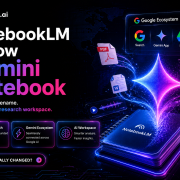

Google has renamed NotebookLM to Gemini Notebook. If you have used it to summarize PDFs, create audio overviews, or research topics, the core product remains unchanged. The rebranding also introduces meaningful upgrades beyond the new name.
Below is a summary of the key changes, what remains the same, and the reasons behind Google’s decision.
Why the Rename?
NotebookLM started in 2023 as an experiment called Project Tailwind, with a simple goal: help people learn faster by working directly with their own documents. It grew fast; today more than 30 million people and over 600,000 organizations use it, from students turning class notes into audio summaries to businesses building onboarding materials.
Google’s reasoning for the rename is straightforward: the tool is now becoming a bigger part of the broader Gemini ecosystem, so the name reflects that. It’s still a standalone product you can go to directly, just like before, but it’s no longer siloed. It now works more closely with the Gemini app and Google Search, making it easier to move from research to results without switching tools.
What’s New Under the Hood
The name change isn’t the only update. Google is rolling out two meaningful upgrades:
1. A Secure Cloud Computer for Every Notebook
Each notebook now gets its own secure cloud computer, letting Gemini Notebook write and run code natively. This means it can do proper data analysis grounded in your uploaded sources, not just summarize them, but actually compute them. Right now this is available to:
- Google AI Ultra subscribers
- Workspace business customers with AI Ultra Access or AI Expanded Access
It’s expected to roll out to all Pro users on the web over the coming weeks, unlocking new types of output (such as generated charts and data-driven reports) alongside deeper analysis.
2. Notebooks That Follow You Across Google
Previously, NotebookLM lived mostly on its own. Now:
- You can already create and access notebooks directly inside the Gemini app, with syncing between the app and the standalone Gemini Notebook site.
- Google says notebooks are coming soon to AI Mode in Search, so your research can follow you into Search itself.
What Hasn’t Changed
- It’s still free to try, with paid tiers for the heavier features (like the cloud computer).
- The core idea is the same: upload your own sources (PDFs, docs, links, audio) and get grounded answers, summaries, and study tools based only on that material.
- The URL and product structure remain a standalone experience; this isn’t being folded into the Gemini app entirely, just connected to it.
The Bigger Picture
This rename fits a pattern: Google has been steadily pulling its AI tools under the “Gemini” umbrella (Gemini app, Gemini models, and now Gemini Notebook) while keeping specialized tools like this one independently accessible. The practical takeaway for users is that Gemini Notebook is positioning itself less as a standalone research app and more as a connected layer that shows up wherever you’re already working in Google’s ecosystem: Search, the Gemini app, and beyond. If you’re an existing NotebookLM user, there’s nothing you need to do; your notebooks carry over, just under a new name and with more horsepower behind them.