 By
By Beyond “Make in India”: India’s Quiet Race to Own Its Weapons, Not Just Assemble Them
For decades, India wore an uncomfortable title: the world’s largest arms importer. Foreign procurement made up the bulk of military spending, and “indigenous” often meant little more than an Indian company bolting together parts designed abroad. That picture is changing, but the change underway is more ambitious, and more difficult, than the “Make in India” slogan suggests.
From Assembly to Ownership
The numbers tell part of the story. Foreign procurement by India’s armed forces has fallen from 62% of total defense spending in FY02 to just 12% by the first nine months of FY25, a dramatic reversal that reflects a genuine rewiring of how the military buys its equipment.
But officials and industry analysts increasingly argue that raw indigenization numbers can be misleading. A weapon system stamped “Made in India” isn’t automatically “Owned by India.” Manufacturing foreign designs domestically builds valuable shop-floor skills. Still, it can also create what analysts call an “Assembly Trap,” leaving India dependent on foreign original equipment manufacturers for the software, source code, upgrades, and life-cycle support that actually make a weapon work. Historically, technology transfer agreements gave Indian public-sector units the ability to build to a foreign blueprint, but rarely handed over the underlying design knowledge itself.
That distinction between building something and truly owning it is at the heart of India’s next phase of defense reform.
The Technology Pyramid
Analysts frame India’s defense base as a four-tier pyramid: platforms and equipment (fighter jets, warships) at the top; systems and products (engines, radars) below that; then components; and finally, at the foundation, processed materials the alloys, composites, and raw electronics everything else is built from.
India has shown real competence at the pyramid’s apex, manufacturing its own tanks and fighter aircraft. But significant gaps remain lower down in aero-engine components, ammunition, radar electronics, and especially in processed materials. The next phase of self-reliance isn’t about producing more of what India already makes; it’s about mastering the high-margin, complex systems that define modern military power the difference between assembling a weapon and actually inventing one.
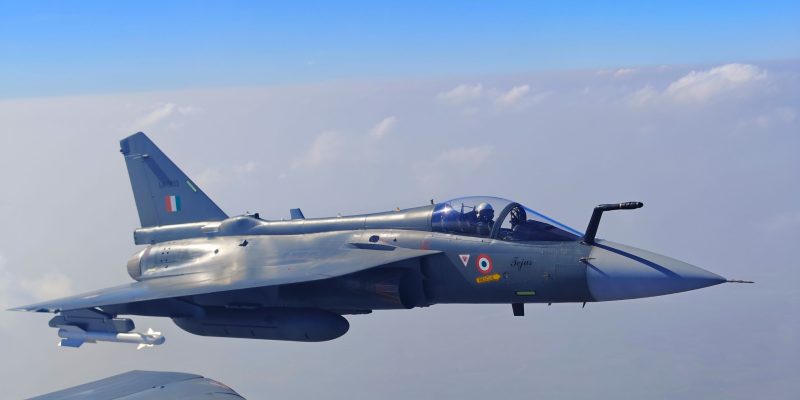
The Tejas Light Combat Aircraft program is often cited as the clearest example of this shift in practice. What began as a single-aircraft project has since spun up an entire domestic supply chain — companies now building avionics, radar components, and sub-systems that feed into the platform, rather than simply importing them wholesale.
Why Software and Sensors Matter More Than Steel
One theme running through this transformation is that the most strategically valuable parts of a modern weapon system are rarely the metal structure. Radars, mission computers, electronic warfare suites, and the software that ties them together are where real capability and real vulnerability live. A platform manufactured entirely in India but running on foreign code and foreign chips can still be remotely limited, monitored, or disabled by the country that built that software, which is precisely the vulnerability indigenization programs are trying to close.
This is why India’s “no-import” and negative import lists, which now cover hundreds of components and sub-systems, have become one of the sharper tools in the self-reliance push, forcing timelines for when foreign-sourced parts must be replaced with domestic alternatives, even at the cost of short-term readiness gaps.
A 17th-Century Precedent
Interestingly, India’s push for defense sovereignty has a historical touchstone that predates the republic by centuries. In the 17th century, Chhatrapati Shivaji Maharaj recognized that dependency on imported weapons and technology left his kingdom exposed to geopolitical pressure, and built one of the earliest templates for self-reliance by systematically absorbing European military technology to construct an independent defense ecosystem. Contemporary policymakers have leaned on that precedent as a reminder that the goal isn’t to shut out foreign technology, but to absorb, adapt and eventually surpass it.
The Institutional Push
Behind the platforms, quieter administrative reforms are trying to remove the friction that has historically slowed Indian defense projects:
- Procurement reform: A newly streamlined Defense Procurement Manual has aimed to simplify acquisition processes and reduce penalties that used to discourage private players — particularly smaller firms — from entering ammunition and component supply chains.
- Start-up integration: Programs like iDEX (Innovation for Defense Excellence) have tried to pull start-ups directly into weapons development, rather than routing everything through legacy public-sector giants.
- Military-innovator hubs: Following the model of the Army Design Bureau, service-specific innovation hubs are being expanded so that military commanders and private developers can refine requirements dynamically, based on what’s actually achievable, rather than chasing idealized specifications that no domestic firm can realistically meet.
The Trade-Off Nobody Wants to Talk About
None of this comes without risk. Critics have long pointed out that self-reliance ambitions sometimes outrun capability; a weapon proudly unveiled at a parade doesn’t always perform when soldiers actually need it. The debate over the Akash surface-to-air missile system versus imported alternatives has been one recurring flashpoint in this conversation: the tension between “buy what works now” and “build what we’ll need in twenty years” is not going away.
That tension is really the crux of India’s defense story right now. Nobody seriously disputes that indigenization is the right long-term goal. The harder question is how much operational risk India is willing to absorb in the short term to get there and whether the institutional reforms of the last few years are moving fast enough to close that gap.
The Bigger Picture
What’s emerging isn’t just an industrial policy story; it’s a strategic one. As global supply chains for defense technology grow more politically contingent (a lesson reinforced by Russia’s reduced capacity to supply spares during its war in Ukraine, and by tightening Western export controls on sensitive components), the calculus for every country with serious military ambitions has shifted. Owning the intellectual property behind a weapon system isn’t just a matter of national pride; it’s what determines whether that country can still fight, repair, and upgrade its own military hardware when the geopolitical weather turns bad.
India’s next decade in defense will likely be judged less by how many platforms carry a “Made in India” label and more by how many nobody else can switch off.