
 By
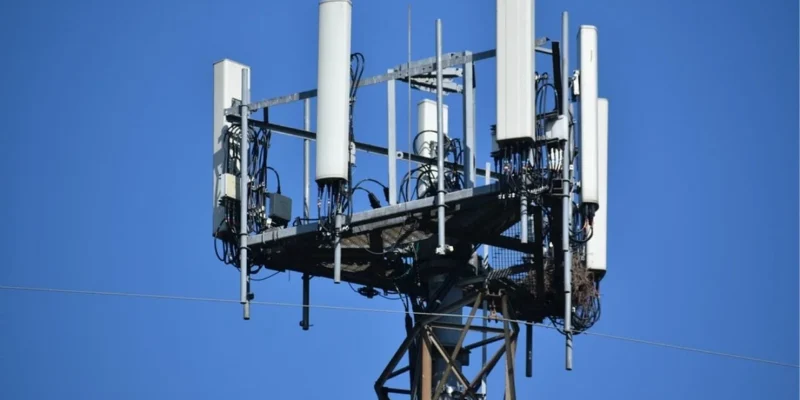
By The government has eased radiation limits for mobile towers, a move aimed at helping telecom operators cover more ground with fewer sites. The revised electromagnetic field (EMF) rules take effect next month, according to an Economic Times report. They double the permitted power density for a 5G base tower station to 10 watts per square meter, up from 5 watts today.
EMF limits control how much radio-frequency energy telecom equipment can emit. Higher limits let signals travel farther, which means each tower can cover a larger area. For operators, that means fewer towers per city and lower network expansion costs.
Why the Government Raised the Limit
Telecom companies had pushed for this change for years, arguing that older EMF limits worked fine for 2G, 3G, and 4G but choked 5G performance. The technology’s higher frequency bands and traffic demands need different power thresholds to work efficiently.
India’s radiation limits have historically run far stricter than global norms. The country followed a power density limit of just 1 watt per square meter for years. That cap rose to 5 watts per square meter last year in a partial relaxation. The new 10-watt limit finally matches the level recommended by the International Commission for Non-Ionizing Radiation Protection. This body advises the World Health Organization on EMF safety standards.
India first adopted ICNIRP norms back in 2008, then tightened them further in 2012. This latest change reverses that stricter stance. India now aligns with roughly 137 countries already using the 10-watt threshold. That list includes most of the European Union, the UK, Australia, Japan, South Korea, and Singapore.
Who Benefits Most
Vodafone Idea stands to gain the most from this change. The operator is still in the middle of its 5G rollout and can now design its network architecture around the higher limit from the start. Bharti Airtel and Reliance Jio, both further along in their 5G deployment, will also benefit. The gains come mainly through lower incremental capital spending and more efficient use of towers they have already built.
Fewer towers per coverage area means real savings on site acquisition, power, and maintenance costs. The telecom industry has spent years absorbing heavy 5G rollout expenses. This rule change offers a direct way to cut costs without slowing down coverage expansion.
What This Means for Consumers
For everyday users, better tower efficiency generally means stronger signals and fewer dead zones. This helps most in areas where operators previously needed multiple towers to maintain coverage. Vodafone Idea, Airtel, and Jio are all expanding 5G into smaller towns. This relaxed EMF ceiling should help them reach more users without proportionally higher infrastructure costs.
The change also puts to rest a long-running industry complaint. India’s radiation caps, among the strictest in the world, were seen as an unnecessary drag on 5G rollout speed and network quality.