 By
By Tata Advanced Systems Limited (TASL) has signed a memorandum of understanding with the Javelin Joint Venture. The deal covers co-production of the Javelin All Up Round (AUR) missile system in India. The Javelin Joint Venture brings together Raytheon, an RTX business, and Lockheed Martin.
TASL is the aerospace and defense arm of the Tata Group. The company emerged as the prime partner for potential future production in India after the joint venture evaluated several firms on capability and expertise.
What the Agreement Covers
Under the MoU, TASL and the Javelin Joint Venture will explore setting up a final assembly and integration facility in India. The plan also includes component manufacturing capabilities within the country.
The arrangement will connect existing US production lines with final assembly work based in India. Lockheed Martin’s facility in Troy, Alabama, will handle multi year production of sub-assembly kits. Raytheon’s facility in Tucson, Arizona, will manufacture the guidance electronics units. These components will then travel to India for final assembly and integration.
This structure mirrors a growing trend in Indian defense manufacturing. Global weapons makers increasingly pair US-based component production with local assembly. This helps meet India’s push for self-reliance in critical defense technology.
Jobs and Supply Chain Benefits, According to the Companies
The companies said the co-production plan will build India’s defense manufacturing workforce. They also said it will help sustain jobs across the US supply chain.
Bringing Javelin final assembly work to Indian facilities and suppliers could create high-tech jobs, the firms said. They added that it could expand local manufacturing expertise and strengthen the missile system’s global supply chain as international demand grows.
Rich Liccion, vice-president of the Javelin Joint Venture and program director for Lockheed Martin Javelin, called the partnership with TASL a pivotal step. He said it would help ensure a resilient supply chain for the anti-tank weapon system. Liccion added that the collaboration expands India’s high-tech manufacturing capabilities. He said it also strengthens security architecture across the Indo-Pacific region.
Jenna Hunt Frazier is president of the Javelin Joint Venture and Javelin program director at Raytheon. She said the agreement builds a foundation to strengthen Javelin’s global supply chain. She said the deal supports faster fielding of the weapon system. Frazier added that it helps sustain readiness for partner nations.
Faster Deliveries and Indo-Pacific Readiness
The companies said the agreement aims to support faster delivery of Javelin systems. They also said it should improve readiness among partner countries across the Indo-Pacific region.
Higher production volumes from co-production could help the US government reach what the industry calls economic order quantities. The firms said this could improve affordability. It could also create cost-saving opportunities across programs that support Javelin Joint Venture production.
The partnership is also meant to deepen defense industrial cooperation between the joint venture and Indian companies. The firms said this will support interoperability and broader Indo-Pacific defense initiatives.
Tata’s Perspective on the Deal
Sukaran Singh is CEO and managing director of Tata Advanced Systems. He described the MoU as the next step in the company’s long-standing relationship with Lockheed Martin and Raytheon.
Singh said the initiative brings critical assembly expertise and knowledge transfer into India’s defense industrial ecosystem. He added that it also strengthens self-reliance.
He also said local assembly of the Javelin All Up Round will enhance operational readiness. Singh noted it will ensure timely access to proven, combat-ready capability for the Indian Armed Forces.
About the Javelin Weapon System
The Javelin weapon system comes from the Raytheon-Lockheed Martin joint venture. Raytheon’s operations sit in Tucson, Arizona, while Lockheed Martin’s operations are based in Orlando, Florida.
According to the joint venture, production has exceeded 55,000 Javelin missiles so far. The venture has also produced over 12,000 reusable Command Launch Units to date.
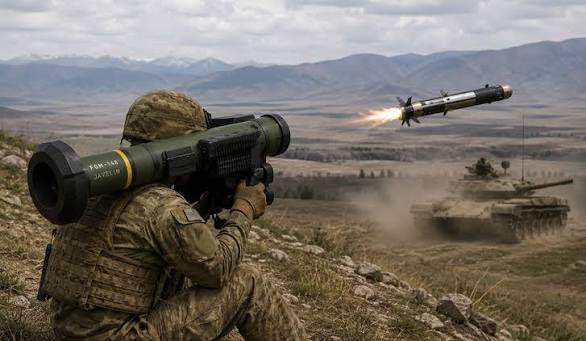
The Javelin is a portable, shoulder-fired anti-tank guided missile system. Militaries worldwide use it for infantry-level defense against armored vehicles. India’s interest in local assembly reflects the broader “Make in India” push within the defense sector. The government has been encouraging foreign original equipment manufacturers to set up domestic production and assembly lines.
What Comes Next
The MoU marks an exploratory step rather than a finalized manufacturing contract. TASL and the Javelin Joint Venture will need to work out facility locations, investment commitments and regulatory approvals before assembly can begin in India.
If the plan moves forward, India would join a small group of countries with local assembly capability for the Javelin system. That could position Indian-assembled units for both domestic use and potential export to partner nations in the Indo-Pacific region.
For now, the agreement signals continued momentum in India-US defense industrial cooperation, an area that has expanded steadily amid shared strategic interests in the Indo-Pacific.