 By hodo_admin
Three Days At The Frontier
At midnight on June 13th, Anthropic switched off access to its newest and most capable model line for customers worldwide.
Four days earlier, Anthropic had launched the same model to real fanfare. Claude Fable 5 arrived with state-of-the-art performance in software engineering, scientific research, and long-running autonomous work, a system built to run for days on a single task without a human checking in. Its sharper sibling, Mythos 5, went to a smaller cadre of cyber defenders and infrastructure operators. That same week, Anthropic named India its second largest market and unveiled a partnership with Tata Consultancy Services. For a brief stretch, Indian enterprises had a seat at the frontier. Three days later, the seat was gone.
The Export Control Directive
On the evening of June 12th, U.S. Commerce Secretary Howard Lutnick sent Anthropic CEO Dario Amodei a letter citing national security authority. It ordered the company to suspend access to Fable 5 and Mythos 5 for every foreign national, anywhere, including Anthropic’s own foreign employees. Nationality cannot be filtered cleanly across API keys and enterprise accounts, so by midnight Anthropic had to pull general access to both models across the globe.
The company says officials pointed to a method of bypassing Fable 5’s safeguards, essentially asking the model to read a codebase and surface vulnerabilities. The same capability, critics of the directive argue, already exists in rival frontier models including OpenAI’s GPT-5.5. The government has offered little public detail about the technical assessment behind the decision.
A jailbreaker who goes by Pliny the Liberator had published a more dramatic claim two days prior, asserting he had extracted instructions touching cyber exploits, explosives, and chemical synthesis. Whether this is what reached officials and prompted the directive remains unconfirmed. Anthropic disputes the proportionality of the response while conceding some vulnerability exists, while the government has not budged.
The dispute did not begin in June. Months earlier, Anthropic had resisted Pentagon demands for unrestricted lawful use of its models, refusing to permit two categories it considered unsafe: mass domestic surveillance and fully autonomous weapons. The dispute culminated in U.S. Defense Secretary Pete Hegseth directing the Pentagon to designate Anthropic a supply chain risk in late February, a label more commonly associated with national security threats than American AI labs. One detailed but disputed account of the timeline claims the administration privately gave Amodei a choice before the directive landed, fix the jailbreak or withdraw the model voluntarily, and that Amodei allegedly declined both. Instead, Anthropic calls the export order as a misunderstanding.
To critics, it was the predictable cost of a company that spent years describing its own technology as dangerous enough to need policing, then balked when someone believed them.
India’s Reckoning
Plenty of countries lost access in the same instant. But the timing gave India’s exposure an unusual, fairly theatrical visibility. The TCS deal and the second largest market announcement had just cast India as one of Anthropic’s flagship growth stories. Developers who had spent three days exploring Mythos class capabilities watched it vanish in the time it takes to read a memo.
The reactions split along a telling fault line. Zoho founder Sridhar Vembu called the ban a wake up call, deeming technology a contested ground of sovereignty, an ultimate weapon, and urging India toward homegrown and Chinese open weight alternatives rather than leasing capability from a company under no obligation to keep the lights on. Sarvam AI’s Pratyush Kumar drew a more surgical line: access should never be mistaken for ownership, and any firm leaning on a differentiator with external control loops has already accepted a kind of vulnerability. Both Vembu and Kumar are speaking of the same vulnerability that comes from relying on a tool owned elsewhere means accepting the power imbalance built into that dependency.
Another compelling comparison keeps resurfacing in Indian commentary, and this one has teeth: this is Aadhaar and UPI in reverse. India built those systems under real constraint, at real cost, because it judged them too foundational to outsource. Frontier AI has never received that treatment. The Fable ban makes the strongest case yet for why it eventually will.
Beijing Reaches A Similar Conclusion
A few weeks before this, China had already shown the same instinct, aimed at the opposite end of the supply chain. In December, Meta agreed to buy Manus, a Chinese founded agentic AI startup that relocated to Singapore the previous year. By April, Beijing’s state planner ordered the deal unwound, elevating the matter all the way to the National Security Commission, the Communist Party body chaired by Xi Jinping. The official justification leaned heavily on antitrust and export law. The real reasoning looked closer to a refusal to let a prized technology stack leave Chinese hands for an American company’s. Two of Manus’s own founders were reportedly barred from leaving the country while the investigation ran.
Washington’s move with Anthropic was defensive, a government restricting what others abroad could reach of a capability it already owned outright. Beijing’s intervention with Manus was retentive, a government stopping its own asset from leaving its own orbit. The U.S. held the simple chokehold of switching the product off, while China leaned on custody over people, holding founders in place.
But what ultimately matters more is what unites the two episodes. We have two states, reasoning from entirely different institutions and toward entirely different outcomes, having landed on the identical premise that frontier AI capability now counts as sovereign territory, worth defending or denying through whatever lever sits closest at hand. Both governments pulled it in opposite directions but clearly concede to the belief that pulling it is justified and necessary.
Open Weight Models & Decentralisation
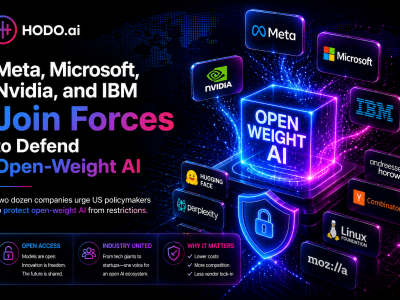
The fastest hedge came from neither government nor any lab in India. In the days right after the Fable ban, a cluster of open weight coding models gave enterprises outside the US somewhere to land, among them Cohere out of Canada, and Zhipu AI and Moonshot out of China. Open weight simply means that the company publishes the model itself, or the ‘weights,’ instead of just renting access to it. Once weights are downloaded and independently hosted, no foreign government or parent company can reach in and switch off access the way Washington just did with Fable.
China’s MiniMax moved fast to say as much, contrasting its own decentralised reach against what it called Claude’s centralised weakness. This alone is not sovereignty, but it might be a workaround. The irony is hard to miss: that India’s fastest answer to losing an American model still came from labs in China and Canada.
Where Does IndiaAI Stand Now?
The IndiaAI Mission carries an outlay of ₹10,371 crore and ranks among the most ambitious sovereign AI programmes anywhere in the Global South. Its plan has always presumed a runway that is built on foreign frontier models while domestic capacity matures underneath, at its own pace. The Fable ban unprecedentedly tests that runway years earlier than planning has budgeted for. A government export directive, issued for reasons still being argued over in public, reached straight into Indian workflows and switched something off without notice. The episode hands the Mission’s architects a dated, concrete case to plan around, complete with a timestamp and a paper trail.
A credible response now would mean designing for interruption. Government and critical sector AI deployments should assume that foreign access can disappear and require fallback options before disruption happens. The second priority should be ensuring Indian developers have the compute capacity to actually run those alternatives, especially domestic and open-weight models that cannot be switched off through an API decision abroad. Foreign models can stay part of the mix, and realistically, they have to. The lesson from Fable is simply that we need to give borrowed capability an escape route before the door shuts.
What Comes Next
Anthropic says it wants Fable 5 restored as soon as capacity and clearance allow. The model will likely return soon, but the episode has already revealed something irreversible about the frontier of AI becoming governed by the politics of who owns it, who runs it and who can take it away.
As the dust settles, it leaves a poignant question sitting with India and every government watching Washington and Beijing reach for the same lever from opposite ends: What does it mean to anchor a national strategy to infrastructure that someone else’s government can silence in an afternoon?