 By hodo_admin
How Identity, Data, and Technology Are Rewriting Indian Elections
For most of India’s electoral history, votebanks were visible. You could see them at rallies, identify them in candidate lists, and hear them in speeches. Political parties spoke to communities, not individuals. A Yadav voter in Etawah and a Yadav voter in Azamgarh were assumed to think alike, vote alike, and respond to the same symbols.
That assumption shaped Indian democracy for decades. It is no longer valid.
When Identity Stopped Being Enough
Caste, religion, language, and region still matter. But they are no longer sufficient explanations for voter behaviour.
A Kurmi farmer today is not just a Kurmi. He is also:
- A smartphone user who consumes short videos
- A beneficiary (or non-beneficiary) of two welfare schemes
- A member of three WhatsApp groups
- Someone who has filed a grievance—or chosen not to
- A voter whose trust in institutions fluctuates with experience
Digital life has added layers to political identity. These layers do not replace caste or community; they reshape how those identities operate. The result is subtle but powerful: votebanks have stopped behaving like solid blocks.
From Social Groups to Behavioural Clusters
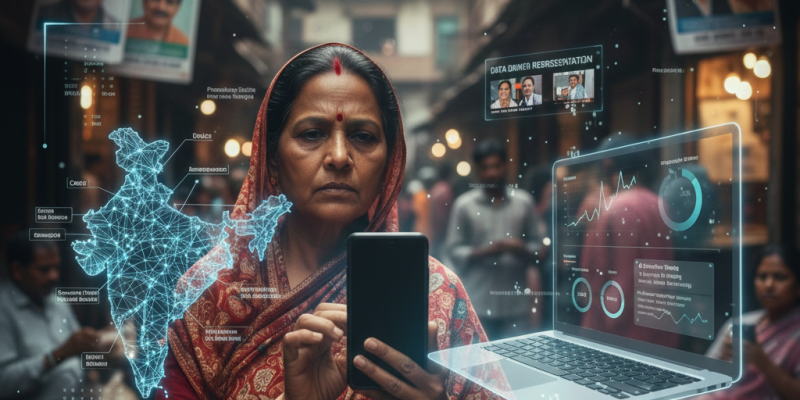
In the analog era, political strategy began with sociology. In the digital era, it begins with data. Voters are now grouped not only by who they are, but by:
- What they consume
- How they respond
- When they disengage
- Which messages irritate them
- Which promises they remember
A single caste group can fragment into multiple political segments. Two voters from the same village, same community, and same income level may receive entirely different political messages.
This is not accidental. It is designed.
How Technology Changed Votebank Logic
Earlier, votebank politics relied on mass signalling:
- One speech for lakhs
- One slogan for millions
- One manifesto promise for a whole community
Digital tools enable selective affirmation. A voter no longer hears what the party stands for in general. She hears what the party wants her to believe it stands for.
AI systems can now:
- Identify voter sub-groups within traditional communities
- Test different narratives digitally
- Measure engagement instantly
- Scale only what works
The language, tone, and issue framing shift silently—without public contradiction. This allows parties to maintain multiple political positions at once, without openly declaring them.
Welfare as the New Digital Votebank
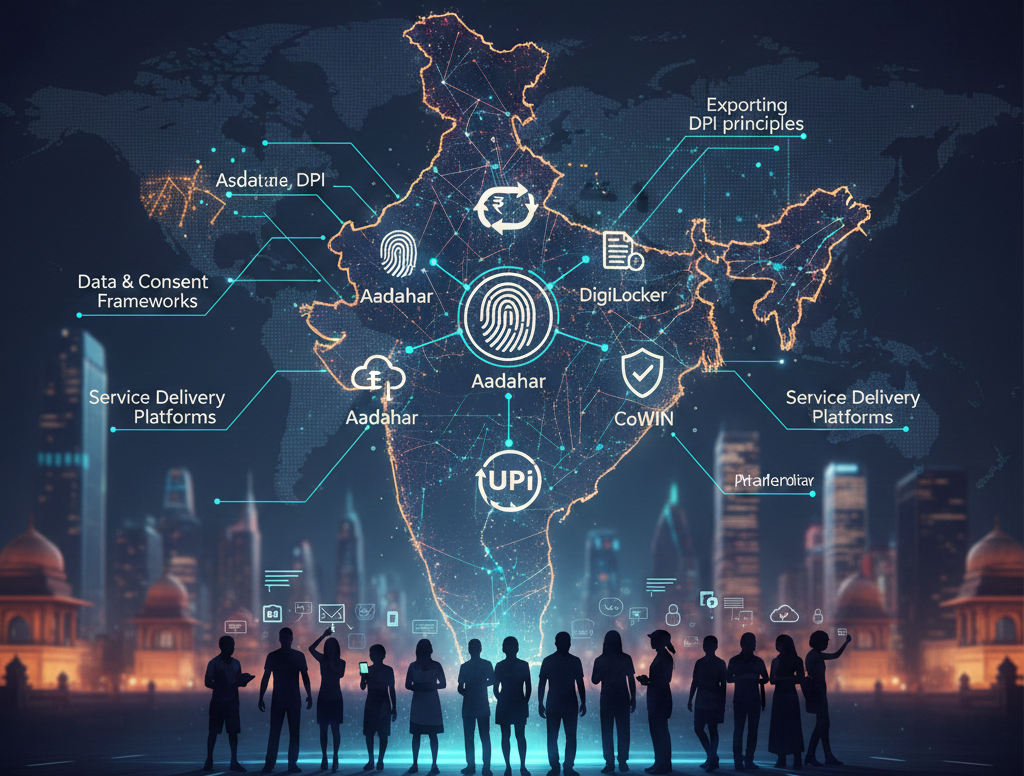
No area shows this transformation more clearly than welfare politics. Earlier, welfare schemes created broad political goodwill. Today, they generate trackable loyalty.
Every scheme leaves a data trail:
- Who applied
- Who received
- Who didn’t
- Who complained
- Who followed up
This data is political gold.
A voter who benefited hears messages of continuity.
A voter excluded hears promises of correction.
A voter who complained hears reassurances of attention.
The scheme remains the same. The political experience is personalised. Welfare, once a blunt instrument, has become a precision tool.
The Quiet Nature of Digital Votebanks
One of the most consequential changes is visibility. Traditional votebanks announced themselves:
- Through caste rallies
- Through voting patterns
- Through street mobilisation
Digital votebanks operate quietly.
They form in private chats, dissolve without protest, and shift without public signals. There is no rally to observe, no slogan to decode. By the time results are declared, the real political movement has already happened—silently, across screens.
This makes modern elections harder to interpret and harder to contest.
Why Opposition Politics Feels Under Pressure
Opposition parties often rely on coalition-building narratives: social justice, constitutional values, or collective marginalisation. These narratives still matter—but they operate at a different scale than personalised outreach.
A broad ideological message now competes with thousands of tailored interactions that feel immediate, specific, and emotionally validating. Human organisations can mobilise loyalty. Machines can manufacture attentiveness. That asymmetry changes the rules of competition.
The Ethical Question No One Has Answered
At what point does political understanding become political exploitation?
If a system knows:
- A voter’s unresolved grievance
- Her economic stress
- Her social identity
- Her emotional triggers
And uses that knowledge to deliver hyper-specific persuasion—has democracy become more responsive, or merely more efficient?
The voter still chooses. But the conditions under which the choice is made are no longer neutral.
Regulation in an Analog Mindset
India’s election framework was designed for posters, rallies, and advertisements. It has little to say about:
- Personalised political messaging
- AI-driven persuasion
- Behavioural targeting
- Automated political communication
What operates privately escapes public scrutiny. This regulatory gap does not stop digital votebank politics. It accelerates it.
Possible Directions Ahead
- Data-Driven Representation: Technology helps parties understand real needs and govern better.
- Fragmented Truths: Each voter receives a different political reality, weakening shared public discourse.
- Opposition Adaptation: Smaller parties adopt open tools and local trust to offset financial disadvantages.
- Institutional Pushback: The Election Commission enforces transparency in digital campaigning.
- Voter Withdrawal: Overexposure leads to cynicism, disengagement, and lower turnout.
What Voters Should Remember
Personalised messages are not proof of care. In the digital age, being “understood” can be a product feature.
Citizens must ask:
- Why am I seeing this?
- Who else is not seeing it?
- What is missing from this story?
Democracy survives not on information alone, but on discernment.
What Political Practitioners Must Confront
Digital tools allow unprecedented precision. But precision without restraint erodes trust. Winning by exploiting identity at the micro-level may succeed electorally, but it reshapes democracy into a system of managed emotions rather than collective choice. Every strategist must decide where efficiency ends and responsibility begins.
The New Reality of Votebanks
Votebank politics has not ended. It has transformed:
- From communities to clusters
- From slogans to signals
- From mass appeals to personalised persuasion
The digital age has not removed identity from politics—it has embedded it deeper, making it less visible and more powerful. The challenge ahead is not technological. It is moral. Because once votebanks become software-defined, the question will no longer be who votes for whom—but who is really choosing.