 By Yash AI
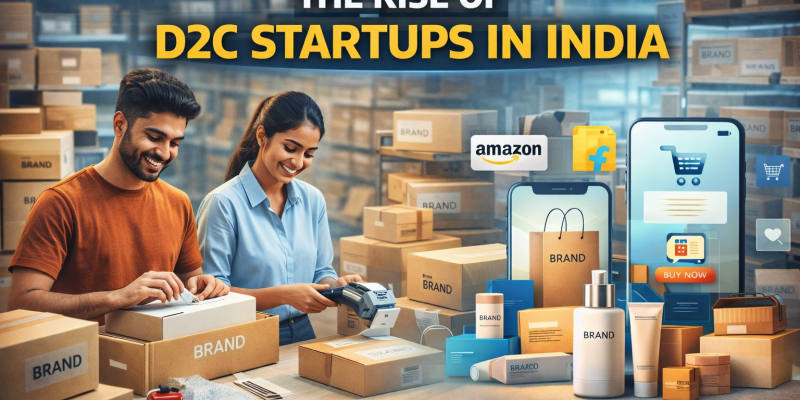
Once upon a time, building a consumer brand in India meant begging for shelf space, dealing with distributors, and watching your margins quietly disappear.
Now? You can launch a brand from your bedroom, sell directly to customers, and track every click, cart, and complaint in real time.
Welcome to the rise of D2C, or Direct-to-Consumer startups. The model is simple: cut out the middlemen and sell straight to the customer. The execution, of course, is where things get interesting.
What Is Driving the D2C Boom?
Digital Infrastructure + Internet Penetration
India’s rapid digital adoption has created the perfect environment for D2C growth. Affordable smartphones, cheap data, and widespread internet access have turned millions of users into online consumers.
Platforms like Shopify and marketplaces such as Amazon and Flipkart have lowered entry barriers for new brands.
You no longer need a retail chain. You need a website, a product, and enough patience to survive your first 100 orders.
Changing Consumer Behavior
Indian consumers are becoming more brand-conscious, quality-driven, and digitally engaged.
They are willing to:
- Try new brands discovered on social media
- Pay for better quality and niche products
- Engage directly with brands online
This shift has created space for startups to compete with established FMCG giants by focusing on identity, storytelling, and customer experience.
Social Media as a Distribution Engine
Instagram, YouTube, and other platforms have become powerful marketing tools for D2C brands.
Instead of expensive TV ads, startups can:
- Collaborate with influencers
- Build communities
- Run targeted digital campaigns
- Create content-driven brand narratives
Marketing is no longer just promotion. It is part of the product experience.
The D2C Advantage
Better Margins
By eliminating intermediaries, D2C brands retain higher profit margins. That money can be reinvested into product development, marketing, and customer experience.
Direct Customer Insights
D2C brands own their customer data. They can track behavior, preferences, and feedback in real time, allowing for faster product improvements and personalized marketing.
Faster Innovation Cycles
Without traditional retail constraints, startups can launch, test, and iterate products quickly.
If something works, scale it.
If it fails, pivot before anyone notices.
It’s like running experiments, but with real money on the line.
Popular D2C Categories in India
The D2C wave has spread across multiple industries:
- Beauty and personal care
- Fashion and apparel
- Health and wellness
- Food and beverages
- Home and lifestyle products
Brands are increasingly targeting niche audiences rather than mass markets, creating highly differentiated offerings.
Challenges Behind the Hype
Of course, not every Instagram brand is the next big success story.
Customer Acquisition Costs
Digital advertising is getting expensive. As more brands compete for attention, acquiring customers is no longer cheap.
Logistics and Supply Chain
Managing inventory, delivery, and returns across India is complex. Logistics inefficiencies can quickly eat into margins.
Brand Loyalty Is Fragile
Consumers have endless options. Switching costs are low, and loyalty is often temporary.
Today’s favorite brand can be replaced tomorrow with a slightly better offer.
Dependence on Platforms
While D2C emphasizes direct selling, many brands still rely heavily on marketplaces and social media platforms for traffic and sales.
Which means you’re still dependent. Just in a more modern way.
The Role of Technology
Technology is at the core of the D2C ecosystem.
From AI-driven recommendations to automated customer support, startups are using tech to:
- Personalize user experiences
- Optimize pricing and inventory
- Improve customer retention
- Scale operations efficiently
The smarter the tech stack, the stronger the brand’s competitive advantage.
The Future of D2C in India
The D2C space in India is evolving from early experimentation to structured growth.
We are likely to see:
- More offline expansion through experience stores
- Stronger focus on brand building and retention
- Consolidation as larger players acquire smaller brands
- Increased use of AI and data analytics
The market will mature. The easy wins will disappear.
And only brands with strong fundamentals will survive.
Final Thought
The rise of D2C startups in India is not just a trend. It is a shift in how businesses connect with consumers.
By removing intermediaries, leveraging digital platforms, and focusing on customer experience, startups are redefining the rules of brand building.
But while the barriers to entry are low, the barriers to success are not.
Because in the end, building a brand is easy.
Building a brand that people actually come back to is where the real work begins.