 By Yash AI
For years, India’s startup story revolved around a few familiar cities. Bengaluru, Mumbai, and Delhi became synonymous with innovation, venture capital, and unicorn headlines.
But something interesting is happening beyond those metro centers.
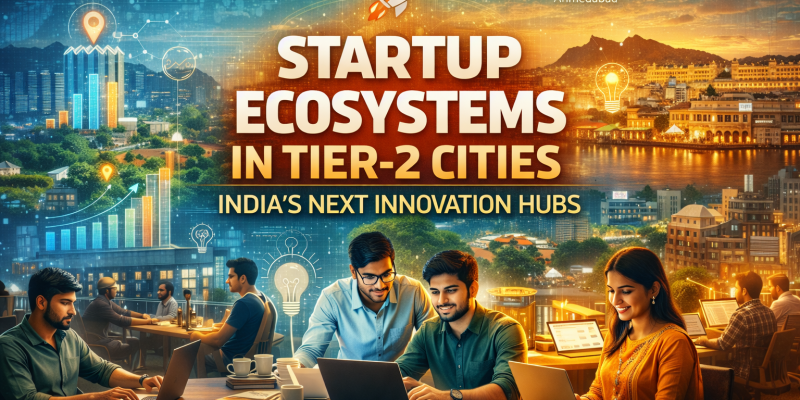
Across India’s Tier-2 cities, a new wave of entrepreneurs is quietly building startups. Cities like Jaipur, Indore, Ahmedabad, and Coimbatore are emerging as growing innovation hubs. These ecosystems may not yet match the scale of metro startup capitals, but they are beginning to shape India’s next entrepreneurial chapter.
Why Tier-2 Cities Are Becoming Startup Hotspots
Lower Cost of Building a Company
Launching a startup in metro cities can be expensive. Office rent, talent salaries, and operational costs add significant pressure on early-stage companies.
Tier-2 cities offer a different environment:
- Lower office and infrastructure costs
- Affordable living expenses for founders and employees
- Longer financial runway for early-stage startups
When a startup spends less on survival, it can focus more on product development and market growth.
Growing Access to Talent
For decades, talented graduates from smaller cities moved to metro hubs for opportunities. That trend is slowly reversing.
Engineering colleges, management institutes, and digital learning platforms have expanded access to skills across the country. Many young professionals now prefer building careers closer to home rather than relocating to crowded metros.
Remote work and digital collaboration tools have also made geography less important.
Digital Infrastructure Is Changing the Game
Government initiatives like Digital India and Startup India have improved connectivity and startup support across smaller cities.
High-speed internet, digital payments, and online marketplaces allow entrepreneurs to operate nationally or globally from smaller locations.
A founder in a Tier-2 city can now launch a SaaS platform, an e-commerce brand, or a digital service startup without needing to relocate to a major metro.
Rise of Local Startup Communities
Another important shift is the growth of local startup communities.
Incubators, co-working spaces, and university entrepreneurship cells are appearing across Tier-2 cities. Startup meetups, pitch events, and founder communities help entrepreneurs learn from each other and build support networks.
Organizations like TiE have also played a role by expanding mentorship and networking opportunities beyond major metro hubs.
These communities reduce the isolation that founders in smaller cities once experienced.
Industries Thriving in Tier-2 Ecosystems
Unlike metro ecosystems that often focus heavily on technology and fintech, Tier-2 startup ecosystems tend to be more diverse.
Common sectors include:
- AgriTech supporting rural supply chains
- D2C brands built through digital marketplaces
- EdTech platforms targeting regional markets
- Travel and hospitality startups leveraging local tourism
- SaaS startups serving global clients
Many founders are solving problems that they personally experience in smaller cities and rural areas. This creates highly practical, market-driven innovation.
Challenges Still Remain
Despite growing momentum, Tier-2 startup ecosystems still face several obstacles.
Limited Venture Capital Access
Most venture capital firms remain concentrated in major metro cities. This makes fundraising more difficult for startups based in smaller locations.
Founders often travel frequently to metro hubs for investor meetings and networking.
Mentorship and Exposure
Although startup communities are growing, access to experienced mentors and industry networks is still stronger in established startup ecosystems.
Early-stage founders in smaller cities sometimes struggle to gain visibility and strategic guidance.
Infrastructure Gaps
Some Tier-2 cities still face infrastructure challenges such as limited coworking ecosystems, fewer accelerators, and less developed investor networks.
However, these gaps are gradually narrowing.
The Opportunity Ahead
India’s entrepreneurial future will not be limited to a few large cities.
As digital infrastructure improves and startup culture spreads, innovation is becoming more geographically distributed. Tier-2 cities have the advantage of lower costs, growing talent pools, and local market insights.
They also bring diversity to India’s startup ecosystem by focusing on real-world challenges beyond metro lifestyles.
A More Distributed Startup Economy
India’s next wave of startups may not always emerge from glass towers in metro business districts.
They may come from founders working out of smaller offices, college incubators, or co-working spaces in cities that were once considered peripheral to the innovation economy.
Tier-2 cities are no longer just talent suppliers for metro startups.
They are becoming innovation hubs in their own right.
And as the ecosystem matures, these cities could play a defining role in shaping the next phase of India’s startup growth.