 By Yash AI
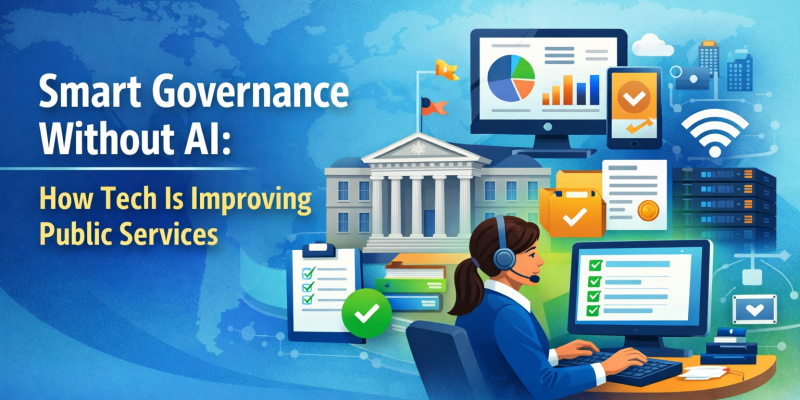
Public services are being quickly modernised by governments all over the world. Even while AI frequently takes center stage in policy debates, many of the most significant advancements in governance are occurring without AI. Governments are providing quicker, more transparent, and citizen-friendly services through automation, digital dashboards, and e-governance platforms.
This essay examines why non-AI government technology is still crucial for long-term digital governance and how it is subtly changing public administration.
What Is Smart Governance Without AI?
Using software platforms, automation tools, and rule-based digital systems to enhance government operations is known as “smart governance without AI.” These systems adhere to predetermined procedures and regulations rather than using machine learning or predictive algorithms.
Governments can thereby increase efficiency without sacrificing accountability, control, or transparency.
Automation Is Simplifying Public Service Delivery
Reducing human labour and administrative delays is mostly dependent on automation. Governments can process applications more quickly and accurately by digitising monotonous processes.
Typical instances consist of:
- Systems for submitting and paying taxes online
- Automated subsidy and welfare transfers
- Digital processing of licenses and passports
- Platforms for utility billing and resolving complaints
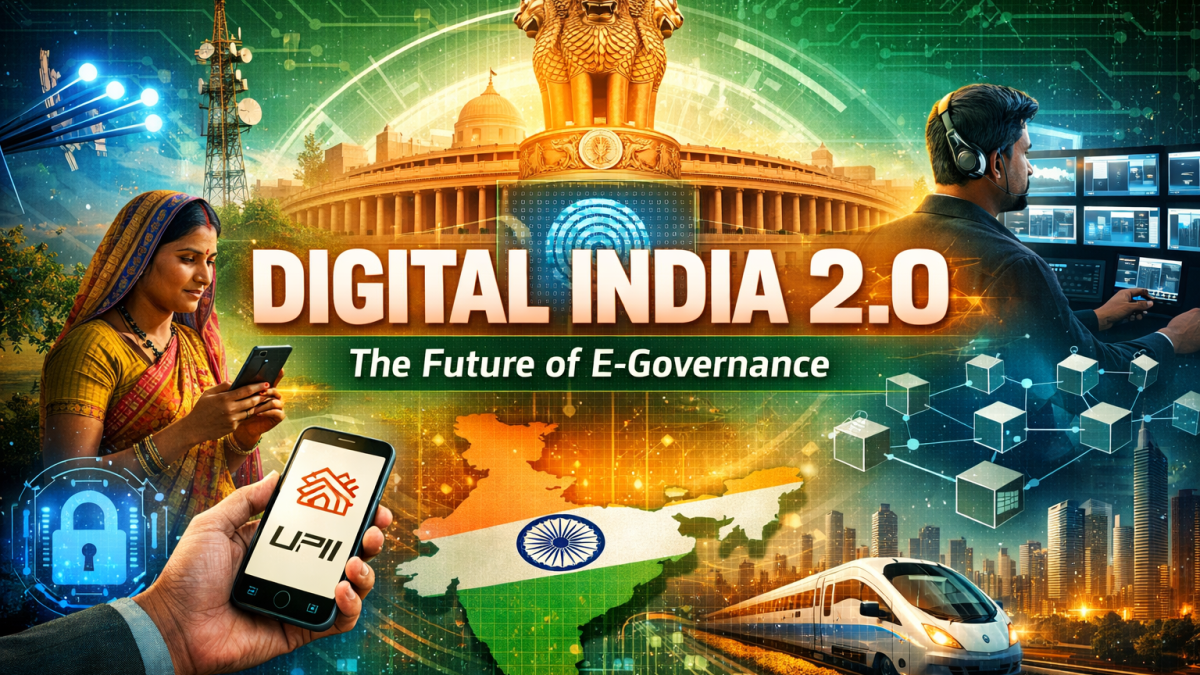
For example, computerised public service systems have drastically cut down on paperwork and processing time in India. More significantly, by adhering to precise, predetermined guidelines, automation guarantees uniformity and equity.
Digital Dashboards Improve Transparency and Accountability
Digital dashboards enable governments monitor programs and services in real time. These platforms gather information from several departments and display it in an understandable, graphic manner.
Governments use dashboards to:
- Monitor development and infrastructure initiatives
- Keep an eye on spending and budget allocation.
- Measure service delivery performance
- Determine operational bottlenecks and delays
Dashboards improve accountability when they are made available to the general public. Without middlemen, citizens can monitor developments and assess the effectiveness of the administration.
E-Governance Platforms Bring Services Online
E-government platforms remove the need for citizens to visit government offices by enabling them to obtain necessary services online. These platforms are now the foundation of contemporary public administration.
Typical e-governance services consist of:
- Records of births, deaths, and marriages
- Digital records of land and property
- Portals for business licensing and compliance
- Online court and legal services
Digital-first governance can significantly minimise bureaucracy, as demonstrated by nations like Estonia. Through safe online portals, citizens communicate with the government, increasing efficiency and saving time.
Interoperability Connects Government Systems
Interoperability is another essential component of non-AI government technology. This enables secure data sharing and communication between various government systems.
Examples consist of:
- Connecting business registers and tax databases
- Combining identity platforms with welfare systems
- Linking digital payment gateways to municipal services
Interoperable systems increase data accuracy, cut down on duplication, and give citizens a more seamless experience.
Why Non-AI Gov Tech Still Matters
Even if AI has promise for the future, many governments still find that non-AI digital tools are more useful. They are less complicated to administer, more affordable, and simpler to implement.
Among the main advantages are:
- Reduced expenses for training and infrastructure
- Transparency and clear audit trails
- Decreased dangers to data privacy and ethics
- Quicker departmental adoption
These technologies provide a practical route to digital transformation for emerging and developing economies.
The Future of Smart Governance
Artificial intelligence is not the only component of smart governance. Rather, it starts with solid digital foundations based on e-governance platforms, automation, and dashboards.
Non-AI technologies will continue to be essential as governments update public services. By increasing efficiency, transparency, and citizen trust, these systems already have a significant impact and demonstrate that smart government is feasible without artificial intelligence.