 By Yash AI
In an age where attention spans are shrinking and information is expanding, traditional methods of learning are struggling to keep up. Long lectures, bulky textbooks, and hours of passive learning are gradually being replaced by a more efficient and engaging approach known as microlearning.
Microlearning focuses on delivering content in small, manageable units, making it easier for learners to absorb, retain, and apply knowledge. As digital platforms continue to evolve, this method is rapidly becoming a dominant trend in modern education.
What is Microlearning?
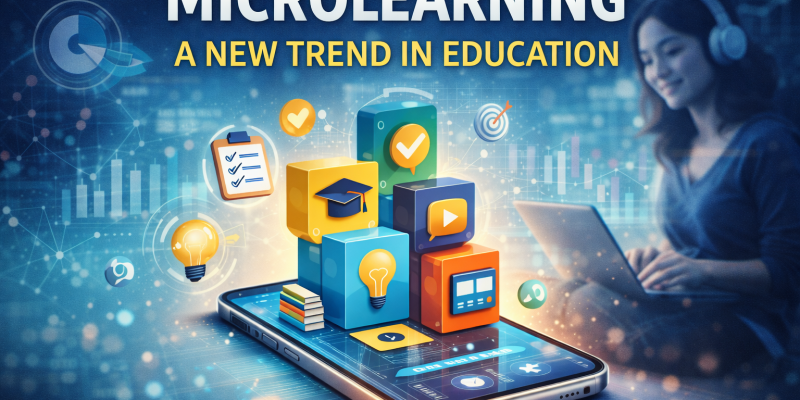
Microlearning is a learning approach that delivers content in short, focused segments, typically lasting anywhere from a few seconds to a few minutes. These lessons are designed to address a specific concept or skill, allowing learners to gain knowledge quickly without feeling overwhelmed.
Instead of sitting through a one-hour lecture, learners can engage with:
- Short videos
- Infographics
- Quick quizzes
- Interactive modules
It’s basically education that respects the fact that people have limited patience and a lot going on.
Why Microlearning is Gaining Popularity
Microlearning isn’t just a trend, it’s a response to how people actually learn today.
1. Short Attention Spans
Let’s not pretend otherwise. Most people struggle to focus for long periods, especially with constant digital distractions. Microlearning aligns perfectly with this reality by delivering bite-sized content.
2. Flexibility and Convenience
Learners can access microlearning modules anytime, anywhere. Whether it’s during a commute or a short break, learning becomes more accessible and less time-consuming.
3. Better Retention
Research suggests that smaller chunks of information are easier to remember. By focusing on one concept at a time, microlearning improves knowledge retention and understanding.
4. Mobile-Friendly Learning
With smartphones becoming the primary learning device, microlearning is naturally suited for mobile consumption. Platforms and apps are increasingly designed to support this format.
Role of Technology in Microlearning
Technology plays a crucial role in the growth of microlearning. Digital platforms and tools enable the creation and distribution of short, engaging content at scale.
Companies like Coursera and Udemy are already incorporating microlearning elements into their courses, offering short lessons and modular content structures.
Artificial Intelligence is also enhancing microlearning by:
- Personalizing content based on user behavior
- Recommending relevant modules
- Tracking progress and performance
This makes learning not just shorter, but smarter.
Applications of Microlearning
Microlearning is being widely adopted across various sectors:
Education
Schools and universities are integrating microlearning into their curriculum to make learning more interactive and engaging.
Corporate Training
Organizations use microlearning for employee training, onboarding, and skill development. It reduces training time while improving efficiency.
Self-Learning
Individuals use microlearning platforms to learn new skills, from coding to communication, at their own pace.
Advantages of Microlearning
- Saves time and increases efficiency
- Improves learner engagement
- Enhances knowledge retention
- Easy to update and scale
- Cost-effective for organizations
In short, it works well because it fits into real life instead of demanding that life revolve around it.
Challenges of Microlearning
Of course, nothing is perfect.
- Not suitable for complex, in-depth subjects
- Requires careful content structuring
- Can lack continuity if not designed properly
Microlearning is great for quick learning, but it cannot completely replace traditional education systems.
Future of Microlearning
The future of microlearning looks promising as more institutions and organizations adopt digital-first strategies. With advancements in AI, gamification, and mobile technology, microlearning is expected to become even more personalized and engaging.
It is likely to play a key role in lifelong learning, helping individuals continuously upgrade their skills in a fast-changing world.
Conclusion
Microlearning represents a significant shift in how knowledge is delivered and consumed. By focusing on short, targeted content, it makes learning more accessible, efficient, and engaging.
While it may not replace traditional education entirely, it complements it by addressing the needs of modern learners. In a world where time is limited and information is abundant, microlearning offers a practical and effective solution.