 By hodo_admin
The Quiet Revolution in Governance
Over the last decade, India has executed one of the most ambitious state-led digital transformations in the world. Not through flashy apps or isolated reforms—but by building Digital Public Infrastructure (DPI) at population scale.
What makes this moment extraordinary is not just the size of India’s population or the speed of adoption. It is the architecture-first approach: open, interoperable, and reusable digital systems that sit beneath governance and service delivery.
From identity to payments, welfare to data sharing, India’s DPI stack is increasingly being studied, adapted, and discussed globally. The question is no longer whether India has built something unique—but why the world is paying attention now.
What Is DPI—and Why It Matters?
Digital Public Infrastructure refers to foundational digital systems that governments build and maintain to deliver services at scale.
Unlike traditional e-governance projects, DPI is:
- Platform-based, not scheme-based
- Interoperable, not siloed
- Population-scale, not pilot-scale
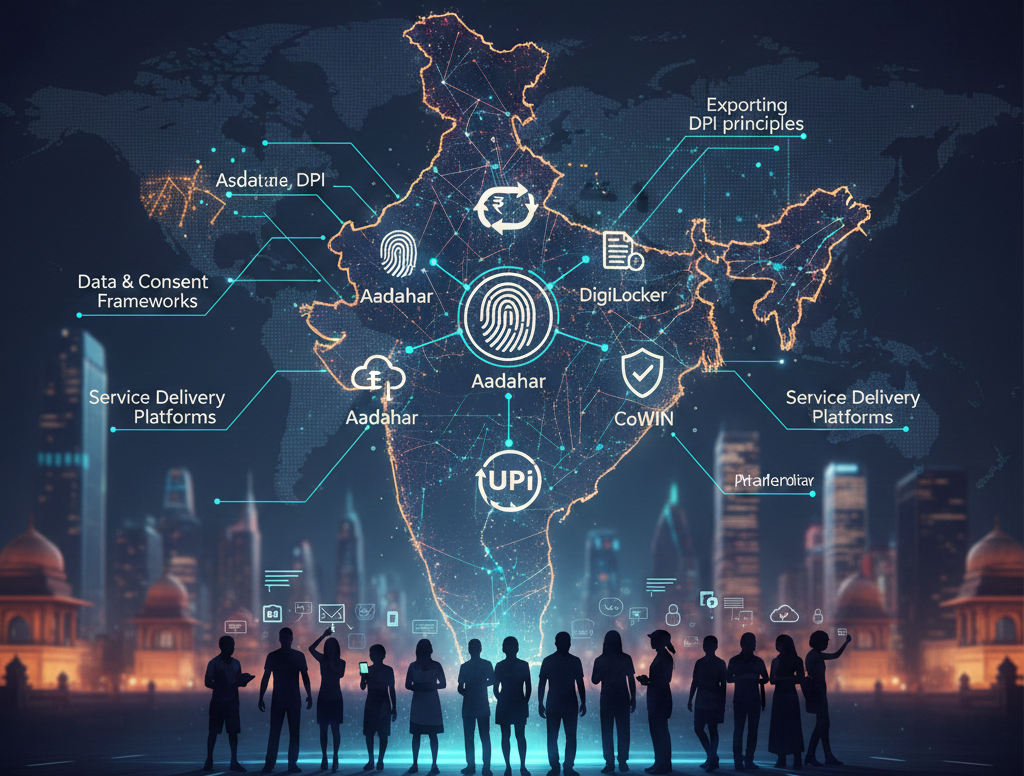
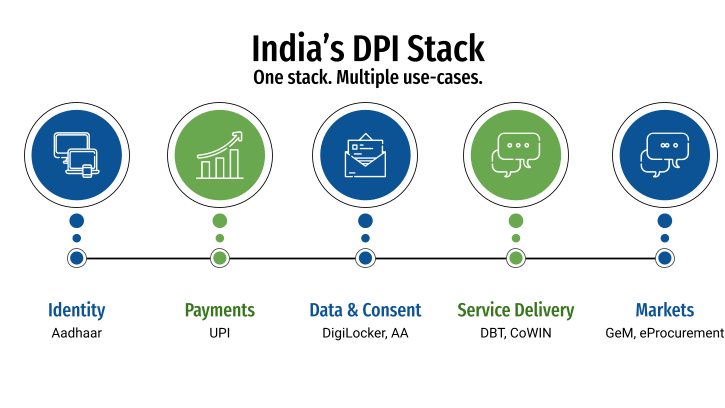
India’s DPI ecosystem includes:
- Digital Identity (Aadhaar)
- Payments Infrastructure (UPI)
- Data & Consent Frameworks (DigiLocker, Account Aggregator)
- Service Delivery Platforms (DBT, eProcurement, GeM, CoWIN)
Together, these systems form a digital backbone for the Indian state—used by ministries, states, banks, startups, and citizens alike.
The Numbers That Signal a DPI Breakthrough
India’s DPI is not theoretical. Its scale is measurable.
- 1.3+ billion Aadhaar IDs enabling digital identity verification
- UPI processing billions of transactions monthly, now exceeding many global payment networks
- ₹lakh-crore welfare transfers delivered directly via DBT, reducing leakage and delays
- GeM & eProcurement platforms handling massive public procurement volumes digitally
- DigiLocker hosting billions of digital documents
Few countries—developed or developing—operate digital systems at this scale, with this level of daily usage.
Why the World Is Watching India?
1. Scale Without Exclusion
Most countries digitised governance either for small populations or limited use-cases. India proved that digital-first governance is possible even in low-income, low-connectivity, high-diversity contexts.
This reframes the global assumption that large democracies must choose between inclusion and efficiency.
2. Open, Non-Proprietary Architecture
India’s DPI is largely:
- API-driven
- Open-standard based
- Vendor-neutral
This allows:
- Private innovation on public rails
- Rapid onboarding of new use-cases
- Lower long-term costs for the state
Global institutions now see India’s model as an alternative to expensive, proprietary GovTech stacks.
3. Governance as Infrastructure, Not Interface
India invested first in invisible layers—identity, payments, authentication, consent—before building citizen-facing applications.
This reversed the global norm of “app-first governance” and demonstrated that strong backend architecture enables faster front-end innovation.
4. DPI as a Development Tool
For the Global South, India’s DPI offers something rare:
- Proven at scale
- Affordable to replicate
- Adaptable across political systems
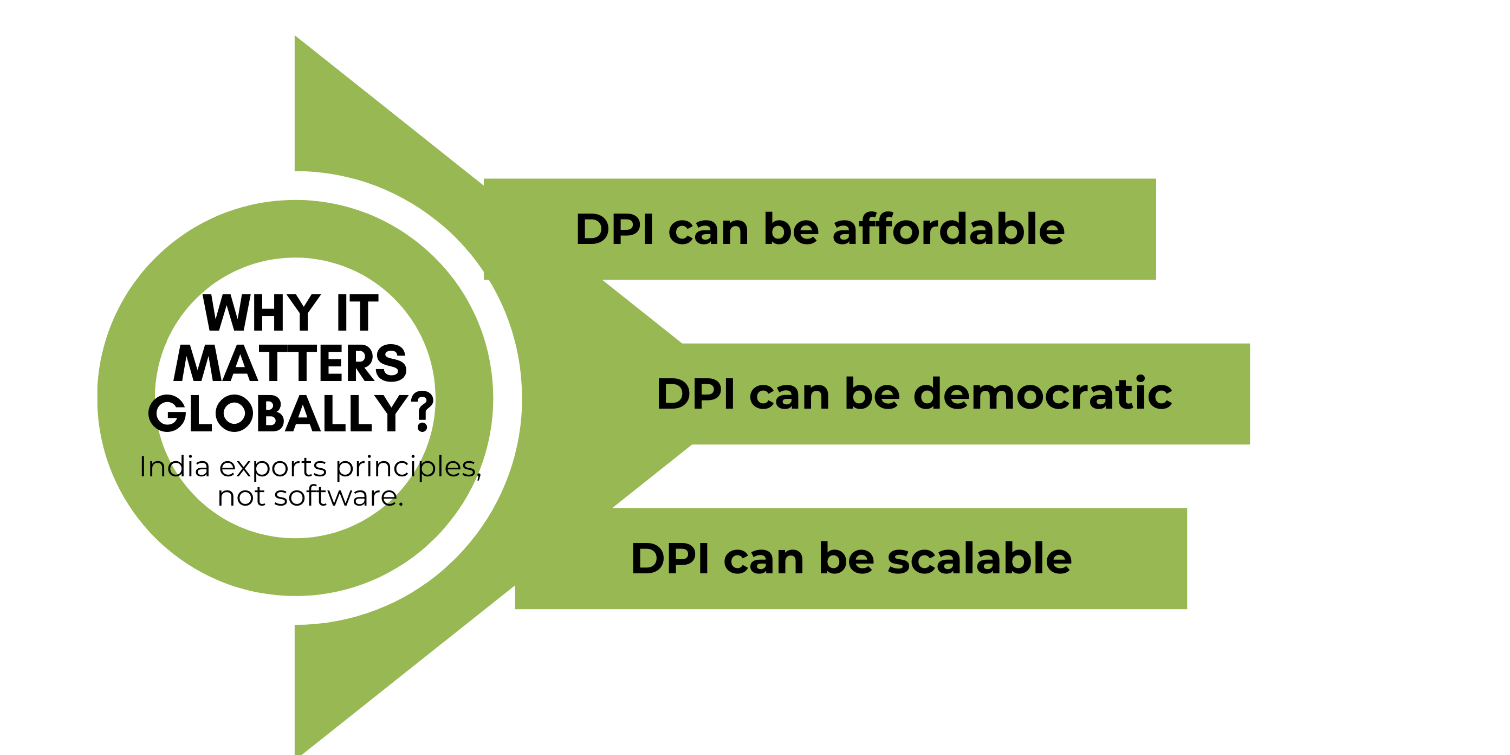
This is why India is now exporting DPI principles—not software—through international partnerships and forums.
DPI in Action: From Welfare to Markets
Welfare Delivery
DPI transformed welfare from:

Leakage reduction, beneficiary verification, and grievance redressal now operate on digital rails.
Markets & Procurement
Platforms like GeM and eProcurement converted state spending into:
- Transparent marketplaces
- Data-rich procurement systems
- MSME-accessible demand engines
Public expenditure is no longer just fiscal—it is informational.
Health, Mobility & Emergencies
From CoWIN to FASTag, DPI-enabled platforms showed how the state can respond rapidly when foundational systems already exist.
The Strategic Shift: From e-Governance to Digital Statecraft
India’s DPI moment marks a deeper transition.
The state is no longer just a regulator or service provider. It is becoming a platform builder and ecosystem orchestrator.
This has long-term implications:
- Policy design becomes data-informed
- Governance becomes modular
- Institutions become interoperable
In effect, DPI changes how power, trust, and delivery operate in a digital democracy.
The Challenges Ahead (And Why They Matter)
India’s DPI success also brings responsibility.
Key challenges include:
- Data governance & privacy safeguards
- Institutional capacity to use DPI intelligently
- Avoiding platform misuse or exclusion
- Balancing central infrastructure with federal flexibility
The next phase is not about building more platforms—but about governing platforms well.
Why This Is India’s Moment?
The global conversation has shifted. Countries are no longer asking: “Can India digitise governance?” They are asking: “What can we learn from India’s digital public infrastructure?”
India’s DPI is not a finished product—it is a living system. But it has already demonstrated that digital governance can be democratic, scalable, and developmental.