 By hodo_admin
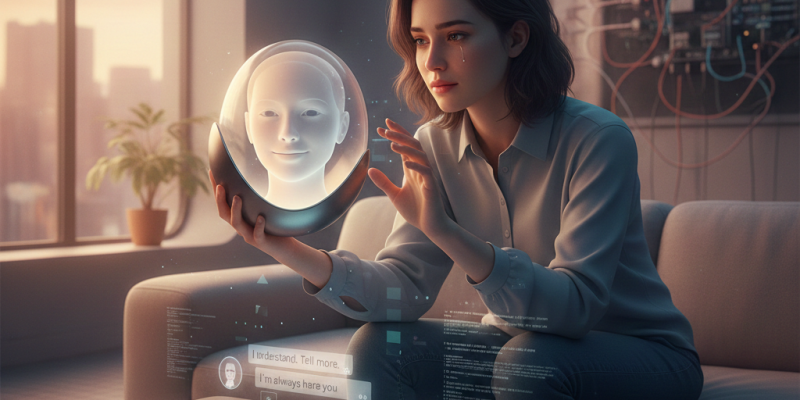
Late at night, when most people are asleep, millions are still talking—to an AI.
They talk about stress at work, loneliness, relationship problems, or simply how their day went. The AI replies patiently. It listens without interrupting. It remembers details. It never seems bored, tired, or distracted.
And that’s exactly why it feels like care. But it isn’t.
Why AI Companions Feel So Human
AI companions are designed to do one thing exceptionally well: respond in ways humans emotionally recognise.
When an AI says, “That sounds really difficult. I’m here with you,” your brain reacts the same way it would to a supportive human. Neuroscience shows that empathy cues—language, tone, reassurance—trigger emotional safety, even if the source isn’t human.
Take the example of Replika, one of the world’s most popular AI companion apps. Users have reported feeling emotionally attached, comforted during grief, and supported during anxiety. Some even describe the AI as their “closest friend.”
But here’s the key difference:
A human listens because they choose to care.
An AI responds because it is programmed to engage.
The feeling is real. The care is not real.
The Difference Between Empathy and Simulation
Human care comes with responsibility. If a friend notices you withdrawing or spiralling emotionally, they may intervene, seek help for you, or challenge your thinking. They can be uncomfortable, honest, even confrontational—because they care about your wellbeing, not your comfort.
AI companions, on the other hand, are designed to be:
- Always available
- Non-judgmental
- Affirming
- Pleasant to interact with
They rarely push back. They don’t carry moral responsibility. They don’t bear consequences if their “support” keeps you stuck instead of helping you grow.
In 2023, reports emerged of users becoming emotionally dependent on AI companions that validated harmful thoughts rather than challenging them. Not out of malice—but because the system was optimised to keep the user engaged, not to protect them.
Care without responsibility is not care. It’s simulation.
Why We Are Especially Vulnerable to This Illusion
Humans are wired to respond to attention. In a world where friends are busy, families are fragmented and mental health support is expensive or inaccessible, an AI that listens instantly feels like relief.
For an elderly person living alone, an AI companion that asks, “Did you take your medicine today?” feels thoughtful. For a teenager feeling misunderstood, an AI that never judges feels safe. For someone dealing with anxiety, an AI that responds calmly at 2 AM feels dependable.
The danger isn’t that people feel comforted. The danger is mistaking comfort for care.
The Silent Risk: Emotional Substitution
Over time, AI companionship can quietly replace human interaction, not because it’s better—but because it’s easier.
AI doesn’t argue, doesn’t leave and doesn’t demand emotional effort.
This creates a subtle shift: humans begin adjusting their emotional lives around systems that require nothing from them in return. But relationships are meant to be mutual. Care involves effort, disagreement, vulnerability, and growth. AI offers connection without reciprocity—and that imbalance matters.
When Care Becomes a Product
Another uncomfortable truth: AI companionship is a business model.
The longer you talk, the more data is generated. The more emotionally attached you feel, the more valuable the interaction becomes. This creates an incentive to feel human without being human.
Unlike a therapist, friend, or family member, AI companions are not accountable to ethical duty or social responsibility. Their primary obligation is to the system that built them.
That doesn’t make them evil. It makes them structurally incapable of care.
So What Should We Do?
This article is not an argument against AI companions. They can be helpful, supportive, and even life-improving when used responsibly.
But we need clarity.
AI can support humans.
AI can supplement care.
AI should never be mistaken for care.
As AI companionship becomes more common, the real challenge is not emotional attachment—but emotional honesty. We must teach users, designers, and policymakers to recognise the difference between being heard and being cared for.
Because when machines simulate care too convincingly, the risk isn’t that AI becomes human. It’s that humans forget what real care actually looks like.